- Home
- City Departments
- Police
- Blue Envelope Program
Blue Envelope Program
Beachwood Police Department’s Blue Envelope initiative is a collaborative effort designed to create a safer and more understanding environment for drivers on the autism spectrum during traffic stops. The program is modeled after the successful initiative launched by the Massachusetts State Police.
The Blue Envelope is a specially designed holder for essential documents—driver’s license, vehicle registration, and a contact card. Its purpose extends beyond document storage: the envelope features critical communication guidelines on the outside, specifically tailored to help officers recognize and adapt their approach when interacting with autistic drivers.
Key Program Objectives
- Enhancing Understanding: By providing officers with immediate, accessible information about autism, the Blue Envelope promotes empathy and patience, leading to more positive interactions.
- Reducing Anxiety: Traffic stops can be particularly stressful for autistic drivers. The Blue Envelope serves as a visual cue, helping officers adjust their communication style to reduce anxiety for the driver.
- Streamlining Communication: The envelope includes practical tips that guide officers in effectively communicating with autistic drivers, even in high-stress situations.
- Encouraging Preparedness: For autistic individuals and their families, the Blue Envelope promotes preparedness. Keeping important documents in one place and knowing how to present the envelope during a stop can help drivers feel more confident and secure.
Table of Contents:
Getting Your Blue Envelope | Preparing Your Blue Envelope | Tips for a Safe Traffic Stop
Getting Your Blue Envelope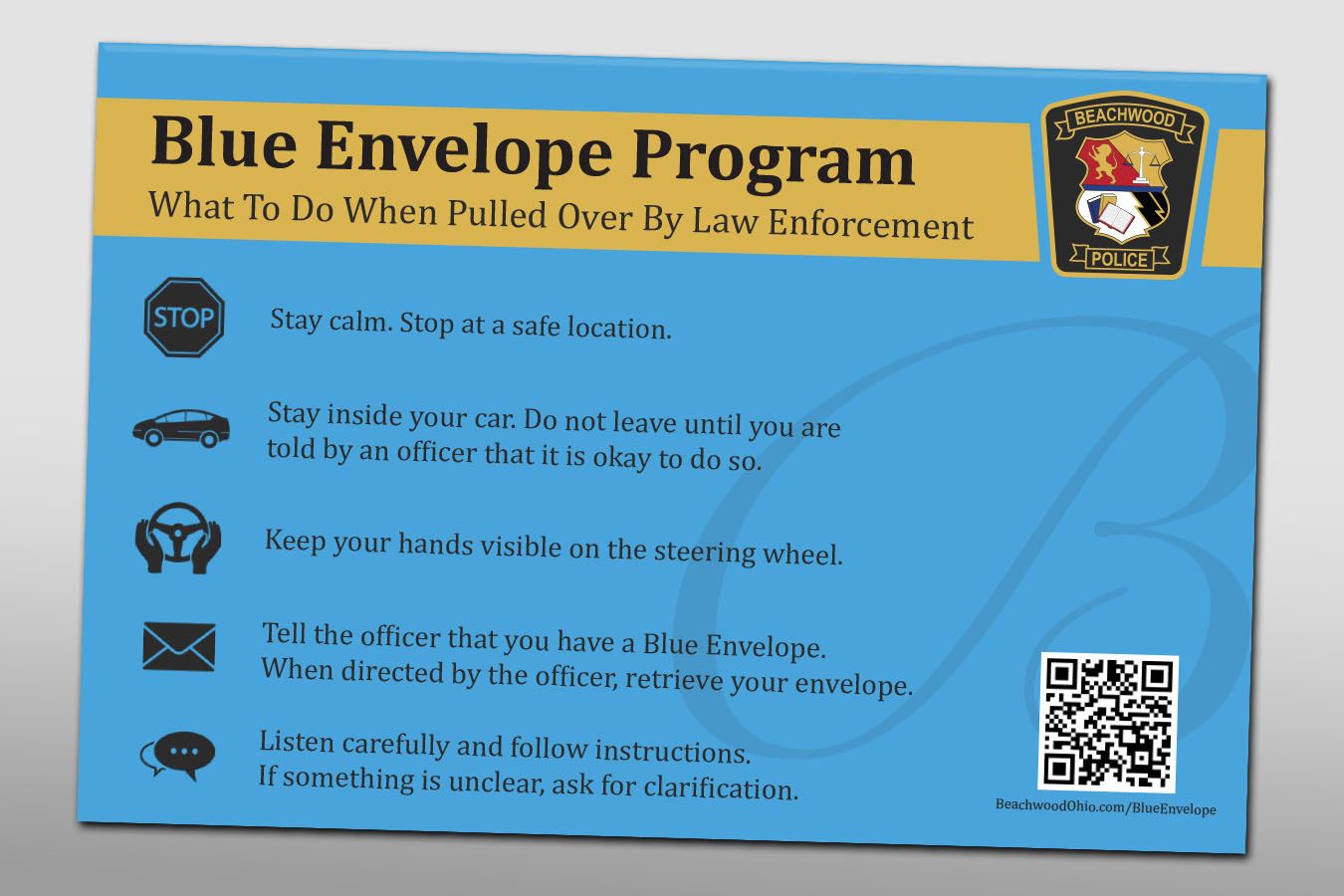
To request a Blue Envelope:
- Residents, visitors, or those working within the city are welcome to obtain an envelope in person at the Police Department, 2700 Richmond Rd.
Preparing Your Blue Envelope
Once you’ve received your Blue Envelope, it’s important to prepare it properly so it can serve its intended purpose during a traffic stop. Preparation involves more than just placing documents inside—it also means storing the envelope in a spot that’s easy to access and visible to officers. Follow these simple steps:
- Gather Your Documents: Start by collecting a copy of your current driver’s license and vehicle registration.
- Insert Documents Into the Envelope: Place these documents inside the Blue Envelope. The envelope is designed to keep your documents secure while allowing for quick and easy retrieval when needed.
- Choose an Accessible Location: For quick access, consider attaching the envelope to the driver’s side sun visor or placing it in another clearly visible and easily reachable spot. This placement helps ensure the envelope is noticed during a traffic stop and serves as a visual cue for officers to adjust their communication approach appropriately.
- Inform Other Drivers: If others, such as family members or friends, also drive your vehicle, make sure they know what the Blue Envelope is, where it’s kept, and why it’s important. This ensures they’re prepared in the event of a traffic stop.
- Keep Your Information Updated: Regularly check and update the contents of the envelope. Make sure your license and registration are current to avoid any issues during an interaction with law enforcement.
Tips for a Safe Traffic Stop
Traffic stops can be stressful for anyone, but they may be especially overwhelming for individuals with autism spectrum disorder. These tips are designed to help both drivers and officers navigate these situations with safety, patience, and mutual understanding.
- Stay Calm: Try to remain as calm as possible. Taking slow, deep breaths can help manage anxiety during the stop.
- Use Your Blue Envelope: When the officer approaches your vehicle, calmly say, “I have a Blue Envelope.” Keep it in a visible and easily accessible spot, such as the driver’s side sun visor. When directed by the officer, slowly retrieve the envelope. If the officer is unfamiliar with the program, you can politely ask them to scan the QR code on the envelope for more information.
- Follow Instructions: Listen carefully and do your best to follow the officer’s instructions. If something is unclear, it’s okay to calmly ask for clarification.
- Waiting in the Vehicle: If the officer returns to their cruiser during the stop, remain seated and wait patiently in your car. It may take 10–15 minutes for them to return. Once they come back, they will explain the outcome of the stop and let you know when it is safe to leave.
- Prioritize Safety: Keep your hands visible at all times, and avoid sudden movements. If you need to reach into your pocket, glove compartment, or elsewhere, let the officer know beforehand.
- Hand Placement: Place your hands on the steering wheel and keep them there unless told otherwise—even if the officer is not at your window.
- Be Prepared for Lights and Sounds: The officer may use a flashlight, speak through a radio, or have flashing lights on their vehicle. These sights and sounds are normal during a stop but can be startling. Being aware ahead of time can help reduce stress.
- Request Help if Needed: If you feel overwhelmed or are having difficulty communicating, you may request that the officer contact your designated emergency contact listed inside your Blue Envelope.
Through awareness, preparation, and empathy, we can all contribute to making our roads safer and more inclusive spaces.